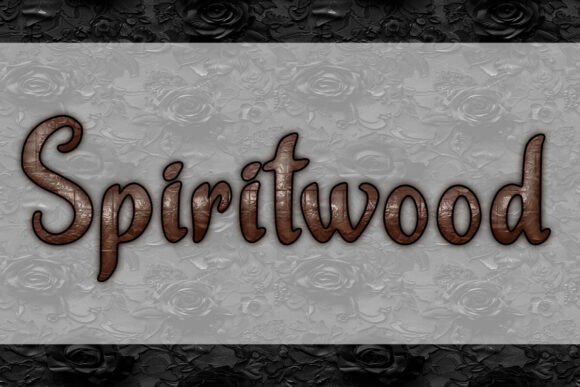
Spiritwood Font: Your Go-To Script Amp for Handmade Charm
If you've ever spent hours searching for a script font that feels personal but polished—something that looks hand-lettered yet cuts cleanly on your Cricut or Silhouette—then Spiritwood is the typeface you’ve been waiting for. As someone who designs printable wedding invites, labels for small-batch candles, and seasonal SVG bundles for Etsy, I’ve tested dozens of script fonts. Spiritwood stands out not just for its elegance, but for how practically it works across real handmade products.
Spiritwood is a refined script amp font—fluid and expressive, with subtle bounce and confident contrast between thick and thin strokes. It’s not overly ornate, so it avoids looking dated or fussy on product tags or packaging. At the same time, it carries warmth and personality—like a friendly handwritten note from a trusted local maker. The lowercase “g,” “y,” and “s” have gentle swashes that add movement without sacrificing legibility. Uppercase letters have presence—ideal for titles, signage, or monogrammed tote bags—and the spacing between characters is thoughtfully adjusted to prevent crowding at smaller sizes.
I use Spiritwood most often for projects where first impression matters: candle labels, boutique gift tags, farmhouse-style wall signs, and wedding welcome boards. Its rhythm makes even simple phrases—“Hand Poured,” “Small Batch,” “Est. 2022”—feel intentional and grounded. For digital printables, I layer Spiritwood over clean sans serif backgrounds (think Montserrat or Poppins) to create contrast that reads beautifully on planner pages or printable quote art. And because it’s designed as a display font—not meant for long paragraphs—it shines exactly where crafters need it most: short, high-impact text.
Readability is where Spiritwood truly earns its place in my font library. On 1" sticker sheets? Crisp. Cut on vinyl for mugs or t-shirts? Smooth edges, no jagged terminals. Printed at 8pt on kraft paper tags? Still legible—especially when I avoid ultra-thin weight variants and stick with the medium or bold styles included in the full set. If you’re designing for physical production, test your cut files at actual size before batching. Spiritwood’s natural flow means it handles slight scaling well, but avoid stretching it vertically—it loses its organic balance.
For packaging and branding consistency, Spiritwood pairs beautifully with minimalist sans serifs. Try it with a light-weight geometric sans for modern apothecary labels, or a warm, slightly rounded sans for children’s party printables. When designing wedding stationery, I often combine Spiritwood with a delicate serif like Playfair Display for body text—keeping the script reserved for names and headings. That contrast gives hierarchy without visual noise. And if you're building a cohesive shop identity, using Spiritwood across your logo, social media banners, and printable templates creates instant recognition. Customers begin to associate that graceful curve with your brand’s authenticity.
One thing I appreciate about Spiritwood is how thoughtfully it’s built for real-world use. The full package includes multiple weights (Light, Regular, Bold), true italics, stylistic alternates, and contextual ligatures—so “The” or “and” can connect naturally without manual tweaking. There are also swash capitals for special emphasis (perfect for “Just Married” on cake toppers or “New Baby” on nursery art). File formats cover OTF, TTF, and WOFF—so whether you’re importing into Canva, Adobe Illustrator, or Cricut Design Space, you’ll have what you need. Multilingual support covers Western European languages, which matters if you sell internationally or design bilingual baby announcements.
Practical tip: Always check the license before listing anything for sale. Spiritwood comes with an extended commercial license—meaning you can use it to create and sell physical products (mugs, shirts, stickers), digital downloads (PDF planners, SVG cut files), client work, and even editable Canva templates. Just remember: you can’t resell the font file itself or claim it as your own design asset. That clarity saves headaches later—especially when scaling your shop or working with wholesale partners.
I reach for Spiritwood when I want handmade appeal without sacrificing professionalism. It works on rustic burlap tags and sleek matte-finish greeting cards alike. A birthday invitation set gains joy from Spiritwood’s springy rhythm; a holiday candle line feels cozier with its soft curves on red-and-kraft packaging. Even small details matter—like using Spiritwood’s alternate “&” glyph on boutique price tags, or its dotted “i” in planner headers for subtle charm. It’s the kind of font that doesn’t shout—but makes people pause, smile, and remember your brand.
Whether you’re cutting vinyl for a local farmers’ market booth, designing Instagram story templates for fellow makers, or building a full printable suite for Etsy, Spiritwood delivers consistent quality and quiet confidence. It’s not flashy—but it’s reliable, versatile, and deeply suited to the craft economy. In a world full of generic scripts, Spiritwood feels like coming home to your best creative self.